

Navy Runs The Strait During Talks (Here's Why)
VP Vance: "We need to talk." CENTCOM: [clears mines]

BREAKING: As this piece was being finalized, President Trump posted on Truth Social, confirming the talks lasted “close to 20 hours” and collapsed over Iran’s refusal to abandon nuclear ambitions. Trump acknowledged that “in many ways, the points that were agreed to are better than us continuing our Military Operations to conclusion” — but made clear that progress on other issues “don’t matter compared to allowing Nuclear Power to be in the hands of such volatile, difficult, unpredictable people.”

In the last 24-ish hours, as I write this, the USS Frank E. Peterson (DDG-121) and USS Michael Murphy (DDG-112) entered the Arabian Gulf and began mine countermeasure operations against Iranian-laid sea mines — moored sensor mines and bottom-resting contact mines that have choked the world’s most critical energy chokepoint for six weeks. The transit happened during 21 hours of direct U.S.-Iran negotiations in Islamabad, the first face-to-face talks between the two countries since 1979. By this morning, again as I write this, the talks collapsed. Vice President Vance cited Iran’s refusal to commit to nuclear non-proliferation as the hard stop.
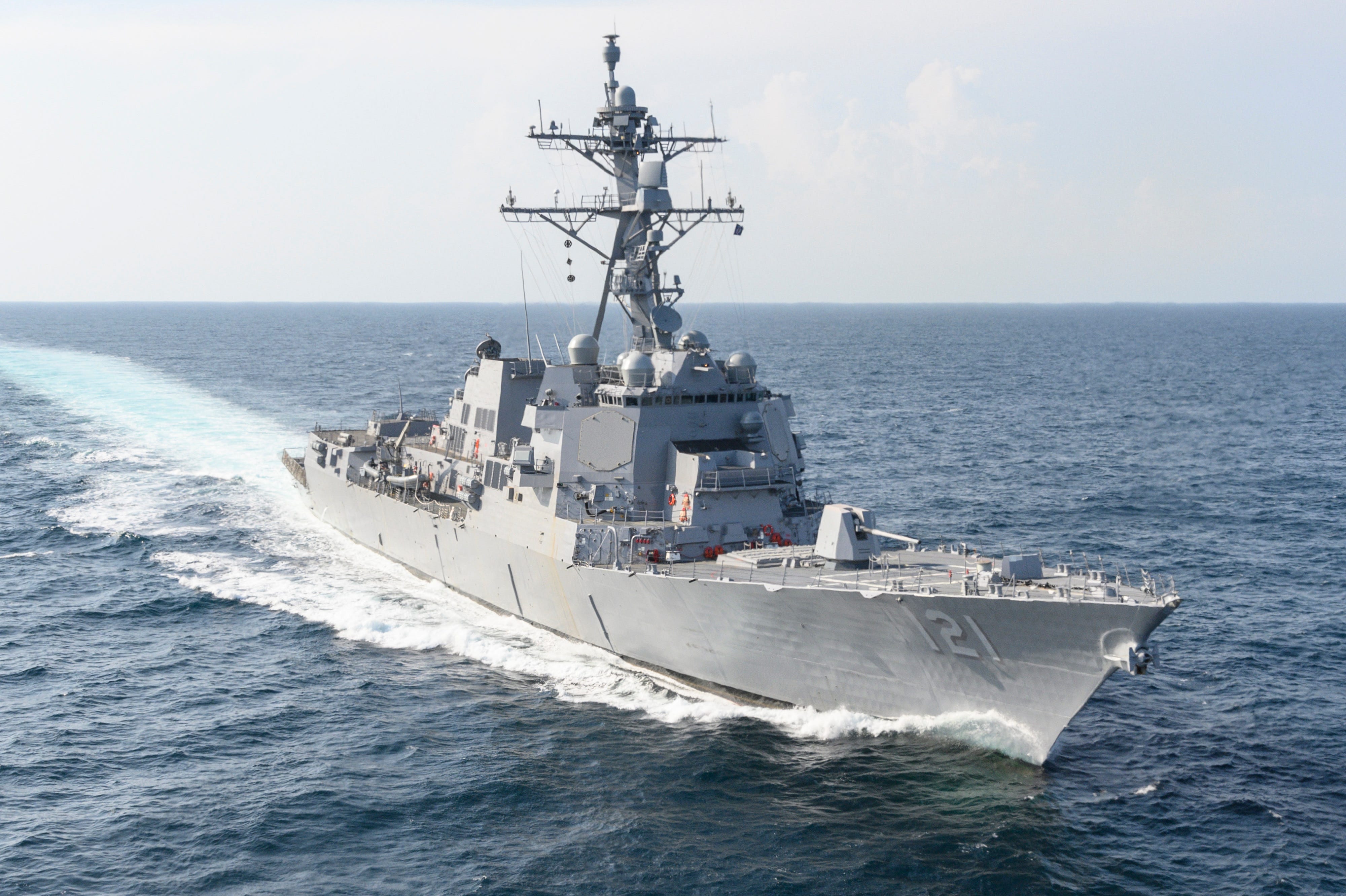
Some mainstream coverage framed the Strait transit as a diplomatic blunder — a provocation that torpedoed fragile negotiations. That’s the wrong read. The real question isn’t why CENTCOM executed the transit during active negotiations… The question is: why isn’t anyone asking that question?
Mine countermeasure operations in a contested strait during ceasefire negotiations are coercive in nature with dual operational implications. If Iran fires on the destroyers, the ceasefire is voided, and resumed kinetic strikes are legally and politically justified. If Iran cannot prevent the clearance from proceeding (which is what has happened so far), the Strait begins reopening without Iran formally surrendering the blockade.
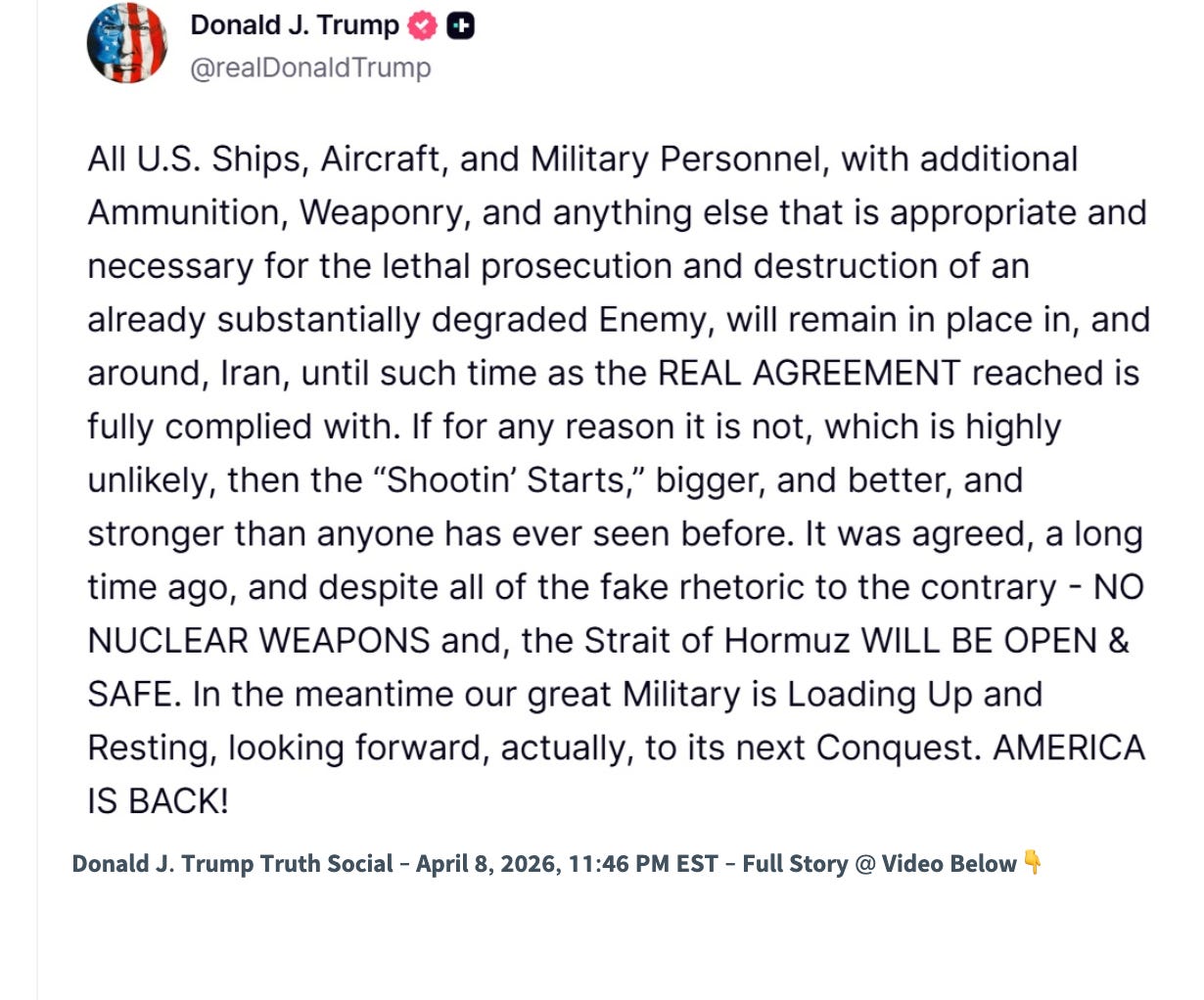
CENTCOM leveraged the negotiating space to execute the operational objective Trump had already announced three days earlier: “The Strait of Hormuz WILL BE OPEN & SAFE.”
The Tell
Iran’s response is the actual signal. Tehran issued a public denial of the transit but did not contest it kinetically. That’s capitulation as a result of a lack of will, or more likely a lack of capability to challenge the U.S. Destroyers. What matters is what didn’t happen: no missiles, no fast-attack craft swarms, no attempt to enforce the blockade.
CENTCOM called the bluff.
The nuclear question remains unresolved. But the operational problem — the thing choking global energy markets and justifying continued U.S. presence in the Gulf — is being solved in real time by two Arleigh Burke-class destroyers and the underwater drones that will follow them.
What DDGs Bring:
The Peterson and Murphy aren’t traditional mine countermeasure vessels. Arleigh Burke Flight IIA destroyers carry the AN/SQQ-89 integrated undersea warfare system: hull-mounted and towed-array sonar capable of detecting and classifying both moored sensor mines like Iran’s Maham 3 and bottom-resting contact mines like the Maham 7. Their MH-60R Seahawk detachments provide airborne mine countermeasure capability — sonar and laser detection systems that can map the minefield from altitude before surface ships enter the kill zone.
But the real capability is defensive overmatch. The Aegis combat system gives these ships 360-degree air and surface awareness while they work. Traditional MCM vessels (which were just decommissioned) couldn’t do that. DDGs can clear mines and kill anything that tries to stop them.
The UUVs CENTCOM mentioned, possibly MK 18 Kingfish or Knifefish autonomous systems, reduce risk to manned platforms by mapping the bottom and identifying threats.


The Expectation Problem
Clearing the Strait solves the immediate blockage. It also establishes the expectation that the United States will do it again and again, every time Iran decides use global energy markets as a bargaining chip.
Naval mines have been used in the Strait since the Tanker War in the 1980s. What’s new is the potential assumption that U.S. forces will guarantee passage not as a one-time contingency operation but as a permanent security guarantee.
Clearing mines is dangerous work, but it's a solvable problem. The hard part is what happens when we leave, and Iran decides to lay more. The operational problem is being solved. Hope for a long-term diplomatic solution left the building when the U.S. delegation left Islamabad.
The views expressed here are my own and do not represent the U.S. Air Force or the Department of Defense/War.
-Riley
This analysis draws from U.S. Central Command’s official press release announcing mine clearance operations in the Strait of Hormuz, NPR’s reporting on the collapse of U.S.-Iran negotiations in Islamabad, and President Trump’s April 8 Truth Social post declaring the Strait would reopen. Technical details on Arleigh Burke-class destroyer capabilities and mine countermeasure systems are drawn from open-source naval references and Department of Defense publications.