

Agile Combat: The War Inside the War
Total War: Iran's residual threat remains

A note before we begin.
Watchtower Intel exists at the intersection of two things I take seriously: critical analysis and honest conviction. I draw on a career in Air Force intelligence to inform how I read conflict, narrative, and the gap between the two. I also bring a perspective — unapologetically pro-Western civilization, committed to the idea that the liberal world order, for all its imperfections, is worth defending and worth thinking clearly about.
All analysis in this piece is based entirely and only on open-source reporting and publicly available information. The sources are listed at the end. My opinions and perspectives are entirely my own and do not represent the United States Air Force, the Department of War, or the United States government in any form.
It’s day 31 of Operation Epic Fury. Secretary Rubio did two things this morning that are worth your attention before you read anything else. He went on Good Morning America (mass market, normie audience) and stated the same objectives he’s been saying for four weeks: destroy Iran’s missile arsenal, dismantle the navy, prevent the nuclear weapon; claiming immense success on these objectives in weeks, not months. Then he sat down with Al Jazeera (a more hostile audience, geopolitically speaking) and said the same thing again. Almost word for word.
That communications discipline is a deliberate counter to an environment of constant criticism and public confusion. In information warfare terms, Rubio is administering message inoculation — repeating the operational objectives so many times, in so many environments (State Department social media accounts, press briefings, and major interviews), that the objectives become the reference point against which all criticism has to argue.
Keep that in mind as you read what follows because the operational picture is getting increasingly complicated.
More Strait Talk
Last week, I made a specific analytical argument: critics of Operation Epic Fury were conflating two distinct problems.
The first problem — Iran’s conventional military capability — was being systematically addressed. Air Force. Navy. Ballistic missile launchers and factories. Nuclear enrichment infrastructure. These are the declared objectives of the operation, articulated clearly in briefings by CENTCOM Commander General Caine, Secretary Hegseth, and Rubio himself. And by the available evidence, remarkable progress is being made against them.
The second problem — Iran’s ability to threaten the Strait of Hormuz through asymmetric, residual, and dispersed means — was never going to be solved by the same strikes. These are different problems requiring different solutions. Critics who pointed at the Strait and said “see, the operation is failing” were pointing at a problem the operation was never designed to solve in Phase One.
I stand by that argument. But Last week’s events added something important to the calculus. The Strait problem is not the only residual threat.
PSAB: When the Lesson Lands on Your Flight Line
On March 27, Iran struck Prince Sultan Air Base (PSAB) in Saudi Arabia’s interior, roughly 600 kilometers from the Iranian coast. The strike combined ballistic missiles with drones. It wounded at least twelve American service members, two seriously. It damaged multiple KC-135 Stratotanker refueling aircraft.
And it damaged an E-3 Sentry AWACS.
The E-3 Sentry is not a random target of opportunity. It is an airborne command-and-control platform — the brain of the air battle. It coordinates airspace, manages fighter engagements, provides early warning, and gives the joint force commander his picture of the battle. It is one of the highest-value assets in the theater.
And Iran hit it. Precisely.
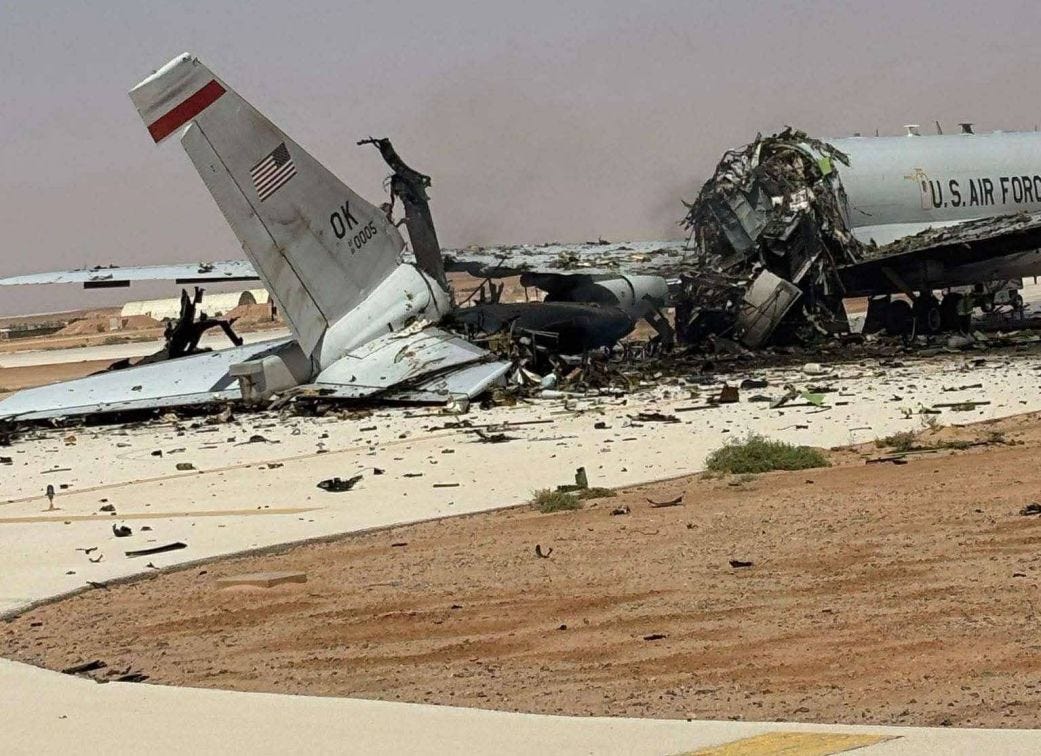
The Pentagon’s response was notable: the 552nd Air Control Wing launched a “full investigation into the security situation at PSAB.” This is asking the question: how did Iran know where to look?
This was not the first strike on PSAB. An earlier attack in mid-March damaged five KC-135 refueling aircraft on the ground — again, multiple high-value platforms, again in close proximity, again hit with enough precision to suggest targeting beyond what Iran’s organic ISR should be capable of.
Russia And China’s Flashlight
The Washington Post reported it on March 6. CNN confirmed it independently. One senior U.S. official described it as a “pretty comprehensive effort”: Russia has been providing Iran with targeting intelligence — including the locations of American warships, aircraft, and bases — since the opening of Operation Epic Fury.
Iran’s Foreign Minister Abbas Araghchi didn’t deny it. In a televised interview, he stated that military cooperation with Russia and China “still continues.”
This raises the likelihood that Russiaand/or China is providing satellite imagery and other movement data on U.S. assets to a nation actively striking American service members. China has the capability to provide BeiDou navigation, radar technologies, and electronic warfare capabilities that enable Iran to conduct precision strikes it would otherwise be incapable of executing. Neither nation has had to fire a shot at the United States. Read this great analysis by the Small War Journal for more details.
This is what 21st-century great-power proxy warfare looks like. One nation conducting total war largely in the dark; the other two holding the flashlights.
The strategic logic for Moscow is easy. Russia entered 2026 with its defense budget built on oil assumptions around $60 a barrel. The Gulf War sent Brent crude toward $120. That windfall is directly funding Russian military operations in Europe. The profit is Russian. The blood and treasure are Iranian.
The Lesson Russia Learned the Hard Way
In June 2025, Ukraine executed one of the most audacious operations of the entire war. They called it Operation Spiderweb.
Using 117 FPV drones launched from wooden containers hidden in trucks parked near Russian airbases — across five time zones, from the Arctic to Siberia — Ukraine destroyed or damaged over 40 Russian military aircraft in a single coordinated strike. The targets included Tu-95 and Tu-22M strategic bombers loaded with cruise missiles ready for launch. Aircraft that Russia literally cannot replace, because its production lines were closed during the Soviet Union.
The estimated damage: $7 billion. The cost of the weapons: under $1,000 each.
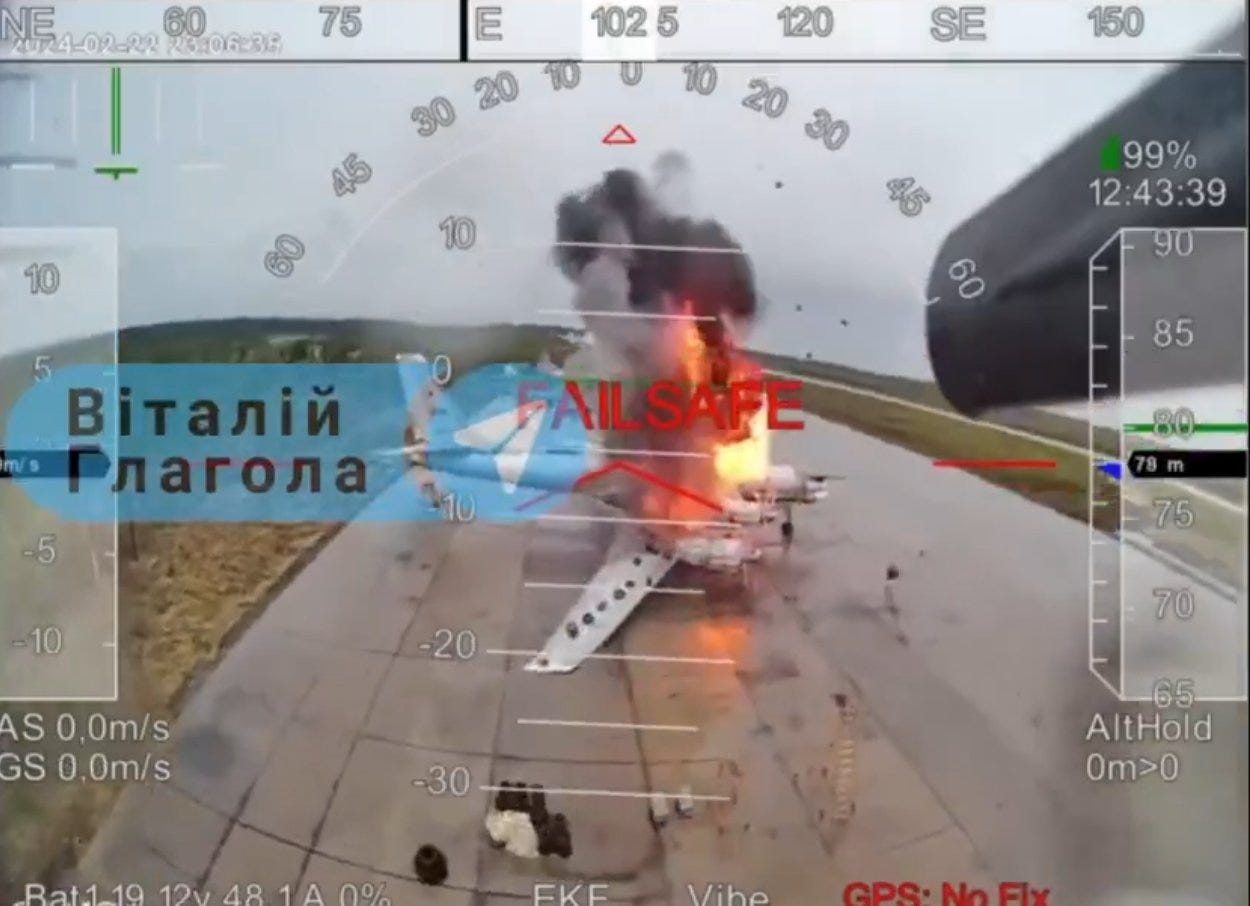
Russian military bloggers were furious. They accused the Defense Ministry of failing to learn from previous strikes. They were right. Aircraft had been parked wingtip-to-wingtip on open tarmacs. No dispersal. No hardening. No meaningful force protection posture against a threat that had been repeatedly demonstrated. Russia eventually adapted — blast walls, hardened shelters, car tires on bomber surfaces to confuse targeting systems.
The parallel to PSAB is remarkable.
High-value aircraft — KC-135 tankers, an E-3 Sentry — parked in close proximity at a base that had already been struck multiple times. The Aviationist noted it directly: the PSAB strikes invite uncomfortable comparisons to Operation Spiderweb, and to the broader lesson that high-tempo operations create pressure to accept force protection shortcuts that feel rational in the moment and catastrophic in retrospect.
Here is why that pressure exists…
ACE: The Doctrine We Can’t Ignore
For the better part of two decades, American airpower operated in an environment of uncontested basing. In Afghanistan. Even in Iraq. Our aircraft could park on tarmacs with little risk. Our logistics pipelines ran without interdiction. We were, in operational terms, spoiled.
The doctrine (Air Force Doctrine Note 1-21) that governs how you protect airpower in a contested environment is called ACE: Agile Combat Employment. The core concept is simple in principle and brutally demanding in practice: you do not mass your airpower in predictable locations. You disperse. You hide. You move. You refuel from unexpected locations. You operate from austere, forward, and rapidly shifting bases rather than large, permanent, comfortable ones.
ACE exists precisely because someone eventually figured out that a sophisticated adversary with precision strike capability will find your aircraft if they know where to look — and then… well…
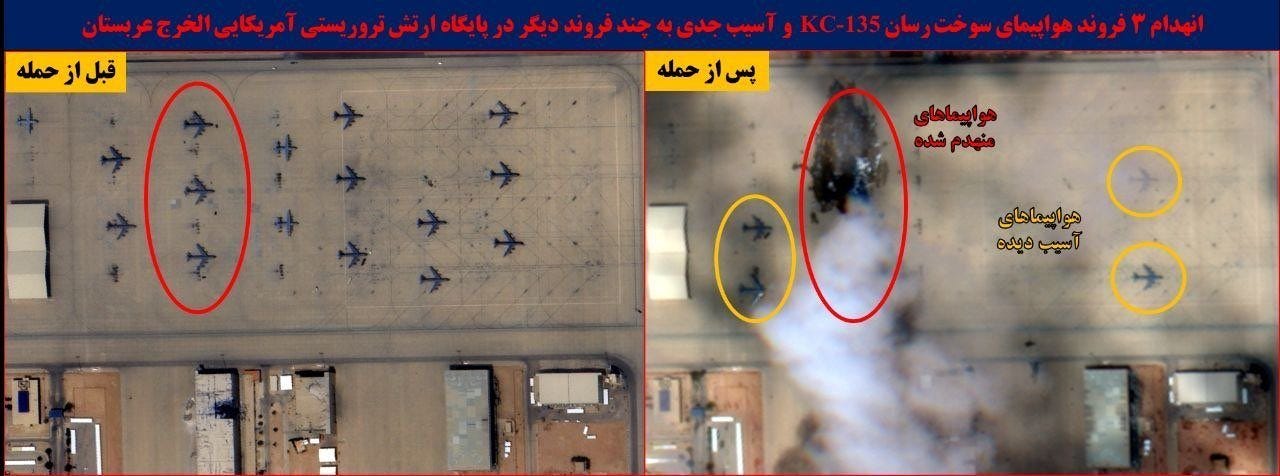
The doctrine anticipates the above reality and designs around it. Small footprints. Distributed operations. Agility over convenience.
The problem is that ACE is logistically and operationally brutal. Dispersal means your supply chains are longer and more complex. It means your fuel, weapons, and maintenance personnel have to be in more places simultaneously. It means your command-and-control architecture has to be more sophisticated, not less, precisely when operational tempo is already pushing everyone to their limits. When you are flying thousands of sorties, dropping thousands of munitions, sustaining around-the-clock operations against a degraded but still capable adversary, the pressure to consolidate, to simplify, to accept the efficiency of massing your assets in one well-defended place is enormous.
That pressure is understandable. It is also what gets aircraft destroyed on tarmacs.
Zooming Out: Why Are We Here?
Before the piece turns to what comes next, I want to make an argument that I think is worth making plainly, because the American public, exhausted from two decades of costly and inconclusive wars, is not necessarily disposed to hear it.
I would argue the United States should maintain basing and access throughout the Middle East. Not because of an ill-informed critique of imperialism. Not simply for oil, (though energy stability matters)
It’s the basic moral duty of counterterrorism operations.
Our Gulf partners — Saudi Arabia, UAE, Bahrain, Kuwait — do not share every American political/cultural value. But they share security interests, trade interests, and a fundamental willingness to participate in a Western-friendly regional order. Forward basing in their territory is what allows the United States to conduct sustained counterterrorism operations against evil terrorist organizations that have demonstrated the will and capability to strike American (And European and Middle Eastern) citizens at home.
Iran is the greatest single enabler of those organizations. Hezbollah. Hamas. The Houthi movement in Yemen. The militia networks in Iraq and Syria. The proxy architecture that has killed Americans, destabilized allies, and kept the region in chaos for decades. Iran built it, funds it, arms it, and directs it.
The public fatigue about the American presence in the Middle East is understandable. Afghanistan was a catastrophe of strategy and will. Iraq included a cascade of flawed assumptions. Those are legitimate grievances. But the lesson of those failures is not that forward presence is wrong — it is that nation-building at gunpoint, without achievable political objectives and public support, is a different enterprise entirely from maintaining access and basing that enables precise, persistent, lethal counterterrorism capabilities. These are not the same thing.
When PSAB is struck by Iranian missiles — likely guided by Russian intelligence — what is at stake is the physical infrastructure that makes it possible to keep the fight far from home.
What Secretary Rubio Is Actually Telling Us
When Rubio says “the Department of War is preparing options for the President” and “we are deploying forces to give the President maximum optionality,” he is not speaking casually.
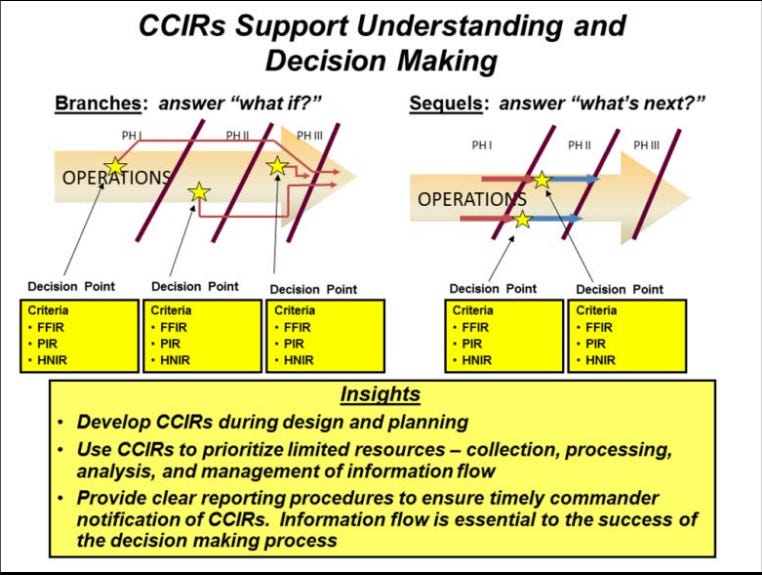
In the operational planning world, there is a precise vocabulary for this. The base plan (the OPLAN) is not the only plan “on the shelf.” Planners build what doctrine calls branches and sequels.
A branch is a contingency built into the base plan — an “if/then” option for conditions that change during execution. i.e., if Iran refuses to reopen the Strait after X days of strikes, then a branch plan might activate. If ground forces become necessary to clear certain key terrain, the branch is there, already war-gamed, already staffed, already resourced in concept if not in full detail.
A sequel is what comes after the current operation concludes — the next phase, based on whatever conditions exist when the current phase ends. If the regime remains in place but militarily crippled, the sequel addresses that environment. If the regime collapses, a different sequel addresses that one. If negotiations produce a partial agreement, another sequel.
John Spencer — West Point’s Chair of Urban Warfare Studies — has mapped the option space in some detail:
In Short, Kharg Island seizure or destruction (85-90% of Iran’s oil exports flow through it). Grid strikes on the national power network. Cyber operations that flip Iran’s internet control against the regime. Maritime interdiction of Iranian oil tankers at scale. Support to internal resistance networks. Elimination of the IRGC’s internal enforcement apparatus.
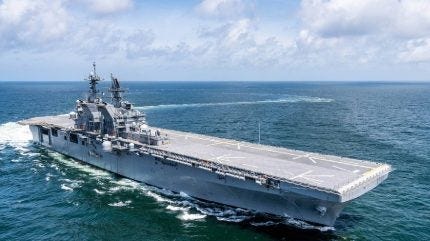
These are all possible options that could be briefed to the President. The 31st Marine Expeditionary Unit with the USS Tripoli — 3,500 Marines, amphibious assault ships, transport and strike aircraft — has entered the chat.
What to Watch For This Week
The diplomatic track and the military track are running simultaneously, and they are in concert and in some ways in competition with each other.
Rubio revealed to the G7 that two Iranian officials want to negotiate but cannot use their phones for fear of being located and killed. The same kill chain that is effective kinetically can slow any diplomatic off-ramp.
Key Indicators:
Whether Pakistan produces a physical meeting between U.S. and Iranian representatives. Rubio’s special envoy Steve Witkoff said he expects it “this week.”
Movement on Kharg Island. President Trump has said publicly, “maybe we take it, maybe we don’t.”
Force protection changes at PSAB and other forward bases. After the E-3 strike and the 552nd’s investigation, the question of whether the Air Force adapts its basing posture is both operationally significant and sometimes publicly visible via commercial satellite imagery.
Any indication of the U.S. response to the Russian intelligence-sharing. If Moscow continues to provide targeting data that kills Americans, the administration faces tough decisions.
The fog of war is real. The information environment is contaminated from every direction. State narratives, OSINT Twitter, partisan meme churn, Iranian information operations, deepfakes of national leaders, and a domestic political environment that often fails to critique the operation on its merits and simply opposes it because of who launched it.
My goal is to stay in my lane. Watchtower Intel is about breaking down conflict, culture, and the narratives shaping what’s real, what’s distorted, and why it matters
That’s day 31.
MTFBWY
— Riley Blanton | Watchtower Intel
Further Reading & Sources
All analysis is based on open-source reporting. Primary sources listed below.
Operation Epic Fury — Military Operations
Air & Space Forces Magazine — US Forces at Saudi Arabia’s Prince Sultan Air Base Suffer Iranian Attack (March 27, 2026)
The Aviationist — Iranian Attack on Prince Sultan Air Base Reportedly Struck U.S. KC-135s, E-3 Sentry (March 27, 2026)
The Aviationist — Five U.S. Air Force Tankers Damaged in Iranian Attack on Saudi Air Base (March 14, 2026)
Military Times — 12 Americans Injured in Iranian Strike on Prince Sultan Air Base (March 27, 2026)
Washington Post — At Least 10 U.S. Troops Wounded in Iranian Attack on Prince Sultan Airbase (March 27, 2026)
Alma Research and Education Center — Daily Report: The Second Iran War, March 29, 2026 (March 29, 2026)
Russia & China Targeting Intelligence
Washington Post — Russia Is Giving Iran Intelligence to Target U.S. Forces (March 6, 2026)
CNN — Russia Is Aiding Iran’s War Effort by Providing Intel on U.S. Military Targets (March 6, 2026)
Bloomberg — Putin’s ‘Hidden Hand’ Guides Iran’s Strikes in Widening War (March 12, 2026)
Small Wars Journal — Chinese Eyes, Iranian Missiles: Intelligence Cooperation in the US/Israel–Iran War 2026 (March 20, 2026)
Toda.org — Iran War Unravels U.S. Strategy and Strengthens Russia-China Axis (March 30, 2026)
Special Eurasia — How Russian and Chinese Tech Underpins Iranian Strategic Depth (March 1, 2026)
Strategic & Operational Analysis
John Spencer, Spencer Guard Substack — Day 29: What Could Possibly Be the U.S. Options in Iran? (March 29, 2026)
Small Wars Journal — Easier to Kill Than to Text: A Mandate for Information Warfare Reform (March 24, 2026)
Small Wars Journal — Narrative as a Weapon: Russian, Iranian, and Chinese Approaches to Cognitive Warfare (March 18, 2026)
Small Wars Journal — To What End? When Technology and Media Seduce Politicians Into Taking Military Action (March 10, 2026)
Diplomatic & Political Track
Axios — Rubio Tells Allies Iran War Will Continue 2-4 More Weeks (March 27, 2026)
Times of Israel — Rubio: U.S. Can Achieve Iran War Aims Without Ground Troops (March 27, 2026)
France 24 — Rubio Says Iran War to Last Weeks, No U.S. Ground Troops Needed (March 27, 2026)
U.S. Department of State — Secretary of State Marco Rubio Remarks to Press (March 2, 2026)
CNN — Day 30 of Middle East Conflict (March 29, 2026)
NPR — Iran Warns U.S. Against Ground Invasion as Pakistan Holds Diplomatic Talks (March 29, 2026)
Operation Spiderweb — Historical Parallel
Wikipedia — Operation Spiderweb (June 1, 2025)
The War Zone — What Ukraine’s Unprecedented Drone Attack Means for Russia’s Bomber Force (June 2, 2025)
PBS NewsHour — Ukrainian Drone Attack on Russian Air Bases Is Lesson for West on Vulnerabilities (June 2, 2025)
Kyiv Post — Spiderweb Strikes Cripple 34% of Russian Bomber Fleet in $7 Billion Blow (June 1, 2025)
Doctrine
U.S. Army — FM 3-0, Operations: Branches and Sequels
Air Force Doctrine Publication 5-0 — Planning
U.S. Army — Planning: Preventing Preventable Problems in the Military Decision-Making Process